
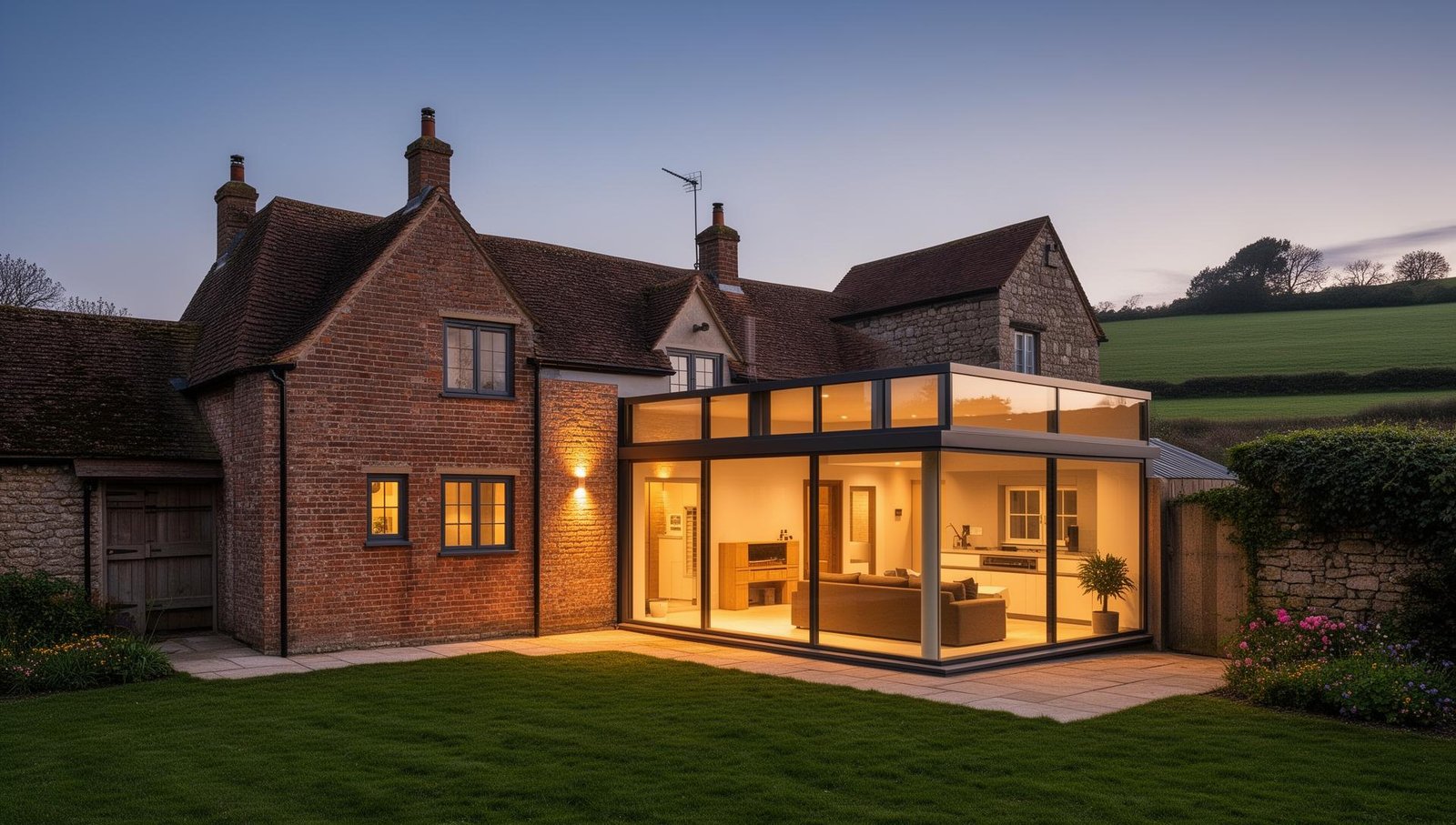
How long does a house extension actually take in Dorset? From the first phone call to handing back the keys, most single-storey extensions take 6–9 months end-to-end, including design and planning. The build itself is typically 10–16 weeks on site. Here’s a realistic week-by-week breakdown so you know what to expect.
Phase 1 — Design and Planning (Weeks 1–12)
Weeks 1–3: Initial Consultation and Brief
You’ll meet your builder and architect, walk the site, talk through how you live and use the existing space, and agree a rough budget and brief. Expect 1–2 site visits before any drawings are produced.
Weeks 3–6: Concept Design
Architect prepares concept drawings and a 3D visual. You review and refine — most projects go through 2–3 design iterations before sign-off.
Weeks 6–8: Planning Submission
If planning permission is needed, the application is submitted to Dorset Council. Validation takes around 5 working days, then the 8-week determination clock starts.
Weeks 8–14: Planning Decision and Tender
While the council reviews, your architect prepares technical drawings for building regulations and tender. You can usually finalise your contractor and start preparing materials lists during this period.
Phase 2 — Pre-Start (Weeks 12–14)
- Building control application
- Party wall notices served (if applicable)
- Structural engineer’s calculations
- Material orders placed for long-lead items (windows, kitchens, steels)
- Final fixed-price contract signed and stage payments agreed
Phase 3 — On-Site Build (Weeks 14–28)
Weeks 1–2: Set-Up and Groundworks
- Site protection, scaffolding, welfare facilities
- Strip-out of any existing structures
- Excavation for foundations
- Building control inspection of trenches
Weeks 3–4: Foundations and Damp-Proofing
Concrete foundations poured, drainage runs laid, oversite formed and damp-proof courses installed. Building control sign off the foundations and over-site before brickwork begins.
Weeks 4–7: Superstructure
Brickwork up to wallplate, structural steels installed, floor joists fitted. The roof structure goes up — usually a cut roof for traditional Dorset cottages or trussed for more contemporary designs. The building becomes weather-tight when the roof is felted, battened and tiled.
Weeks 7–9: First Fix
- Windows and external doors fitted
- First-fix electrics and plumbing
- Underfloor heating pipework
- Insulation to walls, floors and roof
Weeks 9–11: Plastering and Screed
Plasterboard, skim plaster and floor screed all need drying time — usually a week of relatively quiet site activity. Don’t rush this stage; rushing screeds causes lifting tiles and cracked floors months later.
Weeks 11–13: Second Fix
- Skirtings, architraves and internal doors
- Second-fix electrics (sockets, switches, lighting)
- Second-fix plumbing (sanitaryware, radiators, kitchen plumbing)
- Kitchen installation (often a sub-trade specialist)
- Tiling
Weeks 13–15: Decoration and Snagging
Mist coat, two coats of finish paint, woodwork undercoated and finished. Floors laid (engineered oak, LVT or tile depending on spec). Final clean. Joint snagging walk-round with the homeowner.
Week 16: Handover
Building control final inspection and completion certificate issued. We hand over operating manuals, warranties and a snagging list with agreed timescales for any remaining items.
What Can Slow a Project Down
- Planning delays — particularly in conservation areas or for ambitious schemes
- Late material decisions — kitchens and bathrooms have 6–8 week lead times
- Weather — wet Dorset winters can slow groundworks
- Variations — late changes are the single biggest cause of programme slippage
- Party wall disputes with neighbours
Tips From Our Project Managers
- Make all selections before you start on site — kitchens, tiles, paint, taps, handles. We compile a “schedule of finishes” with you before week 1 of the build.
- Keep a single point of contact on the client side. Decisions get made faster.
- Visit weekly rather than daily. You’ll see meaningful progress and avoid disrupting trades.
- Plan for 5% contingency on programme and 5–10% on cost.
- Plan your moving-back-in week well in advance, especially if you have school-age children.
Live-In or Move Out?
For a single-storey rear extension to an existing kitchen, most Dorset homeowners stay in the property and use a temporary “site kitchen” in another room. For larger projects, especially two-storey rears or full renovations, moving out for 4–8 weeks is often quicker, cheaper and far less stressful.
Work With KAP Woodwork & Building Services
We’ve delivered hundreds of extensions across Dorchester, Weymouth, Bridport and the wider Dorset area. Every project gets a written programme, weekly progress meetings and a dedicated project manager. Get in touch for a free, no-obligation site visit and we’ll talk you through a realistic timeline for your project.
Related reading: Planning Guide · Cost Guide · Our Extension Service